 I’m writing this after recovering from tired legs, sore feet, and, above all, a sense of pride that I’m genuinely struggling to put into words. Not self-pride but pride in everyone who was involved in Walk Devon 2026, our inaugural walk across Devon. I’ve been working in the mental health sector for almost a quarter of a century now and it can be quite challenging seeing how some people can be towards one another.
Twenty-four brutal hours later, I saw a side of people that made me grin from ear to ear. People went through physical, mental and emotional pain – all to help people they had never met before. I still get a tad emotional thinking about it now.
This is the newsletter I’ve been waiting to write for a long time. So please — put the kettle on, find a quiet five minutes, and read to the end. Because what happened last month on the roads, trails, and moors of Devon was something truly special, and we want you to know every part of it.
THE COAST TO COAST WALK: Walk Devon 2026
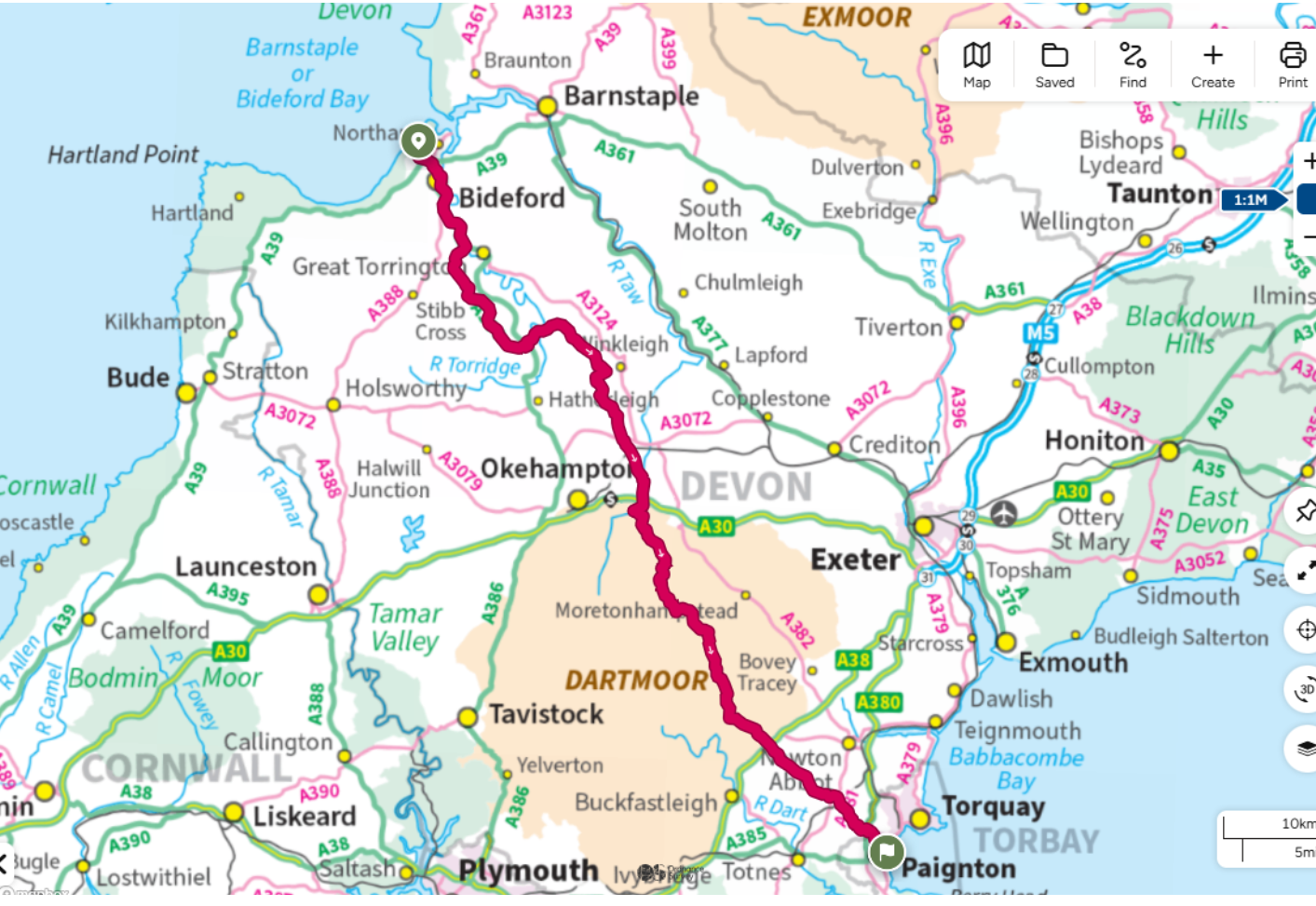
 Westward Ho! to Paignton. 68+ miles. One extraordinary day.
On the afternoon of Friday 19th June, something quietly remarkable happened on a beach in Westward Ho! North Devon.
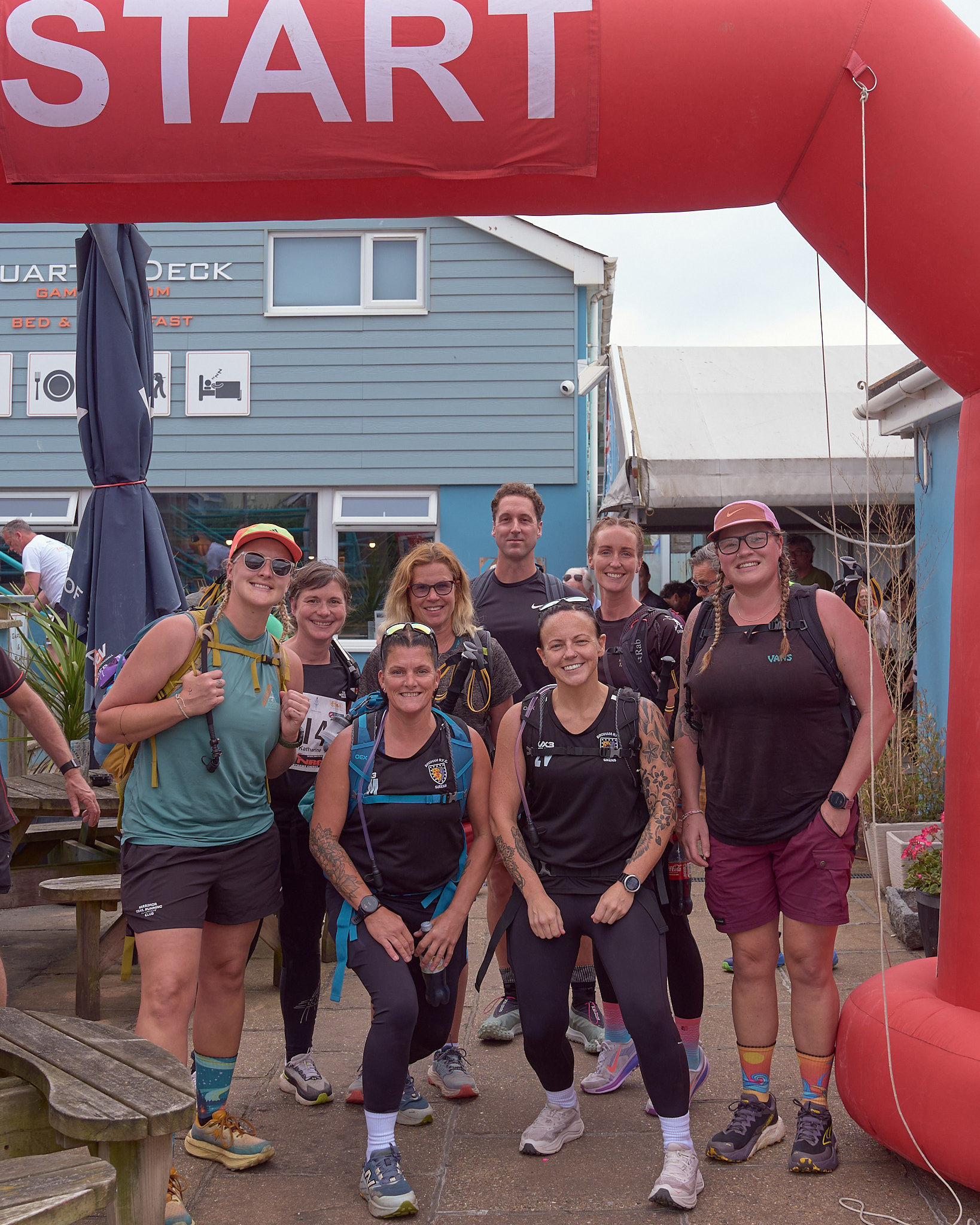
Two hundred and eighty-four people gathered at a pub owned by Rob Braddick, who was incredibly generous in helping us. There were walkers of all ages, fitness levels, and backgrounds — and before setting off, lots of people did something that felt deeply symbolic: they touched the sea. They put their hands or feet in the water at the start of their journey, knowing that the finish line, twenty-four hours later, would be the sea on the South Coast of Devon. That moment set the tone for everything that followed.
The route took walkers along the beautiful Tarka Trail before cutting across the high ground of Dartmoor — finishing in Paignton, our home. Checkpoints appeared every ten miles, staffed by brilliant volunteers and the team at XNRG, the events company that organised the day’s proceedings. We cannot say enough good things about them. Their organisation was exceptional. And as for our volunteers – they were all amazing, each and every one. They were just so warm and encouraging, and their presence at every checkpoint made a hard thing feel achievable. A huge, heartfelt thank you to every single one of them.
As Friday evening turned to Friday night and Saturday morning, the walkers kept moving — through darkness, with head torches and glow sticks lighting the way, picking their way across fields and countryside that looked very different at 2am than it does in daylight.
Then came the rain – and didn’t it rain!!!
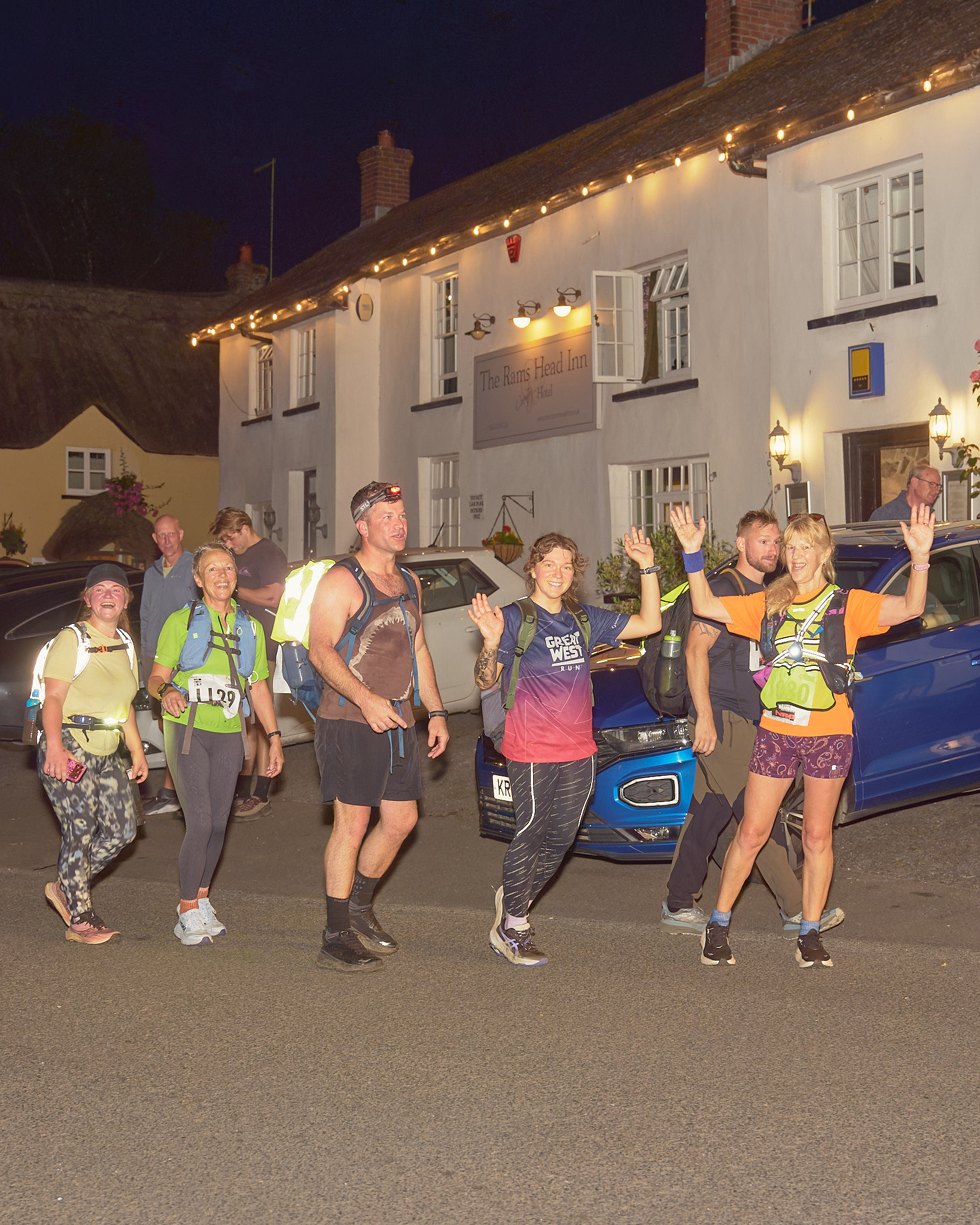 For several hours during the night, it absolutely poured. We’re talking proper Devon rain — relentless, soaking, cold. Every single walker got drenched. There were no exceptions. By the time the rain eased, around 40 people had reached their limit at the next checkpoint and decided, entirely reasonably, that they had had enough. They had already walked an extraordinary distance in the dark and wet, and there is absolutely no shame in that decision. We’re proud of every single one of them. At one section, we navigated a field full of cattle and crops in the pitch black — the kind of moment that sounds funny in retrospect and felt considerably less funny at the time.
And then there is the story of the farmer.
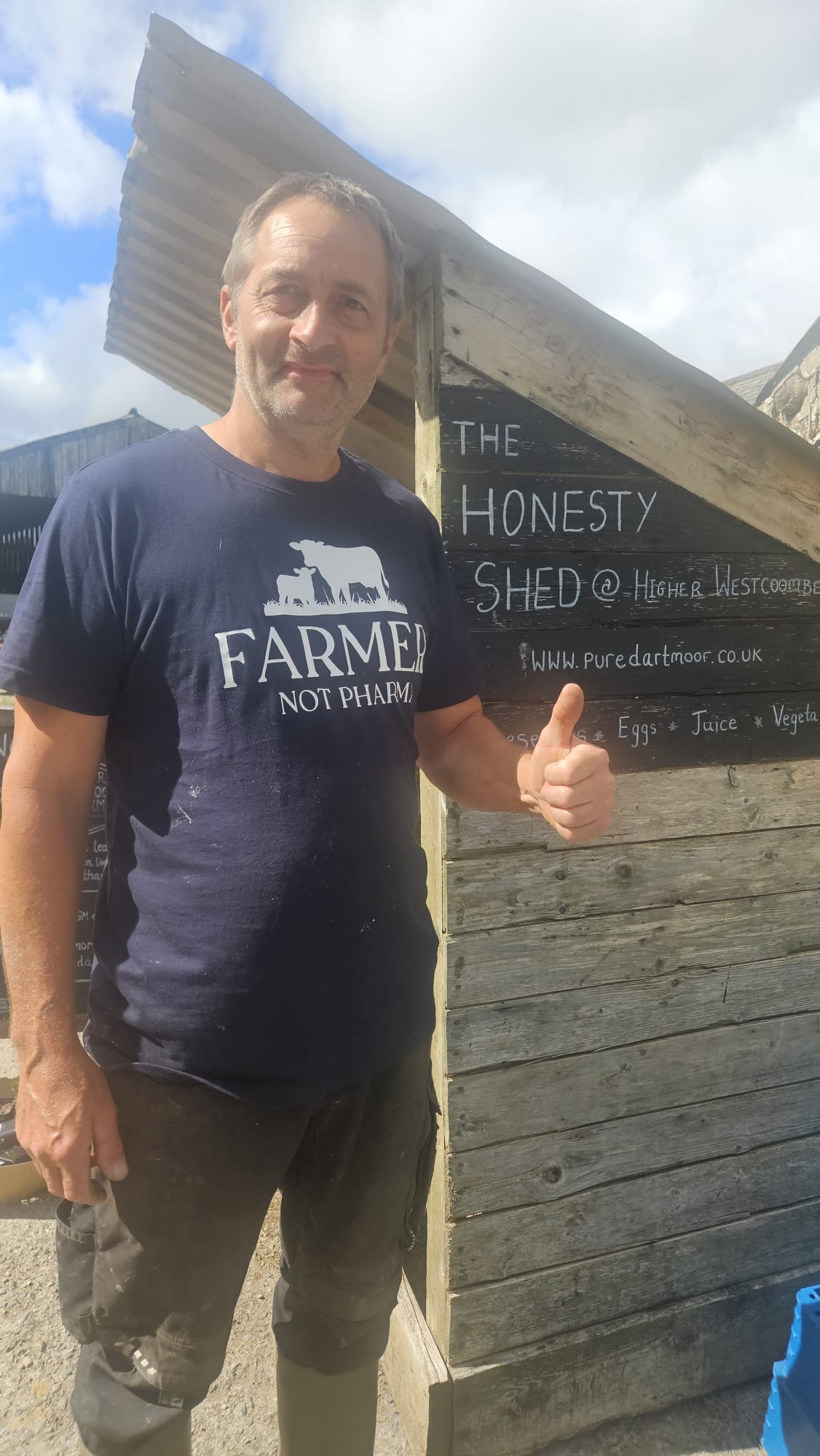 A farmer had sectioned off a field along the route near North Bovey to keep the cows off the footpath for us. He mentioned in passing to one walker that he’d paid for it out of his own pocket — no drama, no complaint, just a decent human being. Anyway, the guy he spoke to, Alex, contacted us and told us the story. With the help of Alex (well, actually it was all Alex), we tracked him down afterwards. He hadn’t asked for anything and hadn’t expected anything, but we found him and gave him a cheque to cover his time and any costs. He was genuinely touched. It was a small thing, but it’s the kind of moment that reminds us that we’re all in this thing called life together and if we can return a favour then why shouldn’t we?
284 people set out. 84 of us completed the entire route without a single boost.
It’s worth mentioning: if any walker was really struggling, there was a “boost” option available — not a chocolate bar, but a lift from one checkpoint to the next, cutting out ten miles. It was there as a lifeline, not a failure. Walking is hard enough without pride getting in the way.
Eighty-four people walked every step, through the night, through the rain, through the mud and the darkness and the cattle fields, from the sea in the north to the sea in the south. And on Saturday morning, as the rain was replaced by one of those glorious Dartmoor mornings — clear skies, warm sun, the high moor stretching out in every direction — we were still walking. By late Saturday afternoon and into the evening, walkers were crossing the finish line in Paignton in ones and twos or as teams, some coming in much later than expected, some (including the author) much faster than expected. We were all determined — absolutely determined — to finish what we’d started.
The Finish
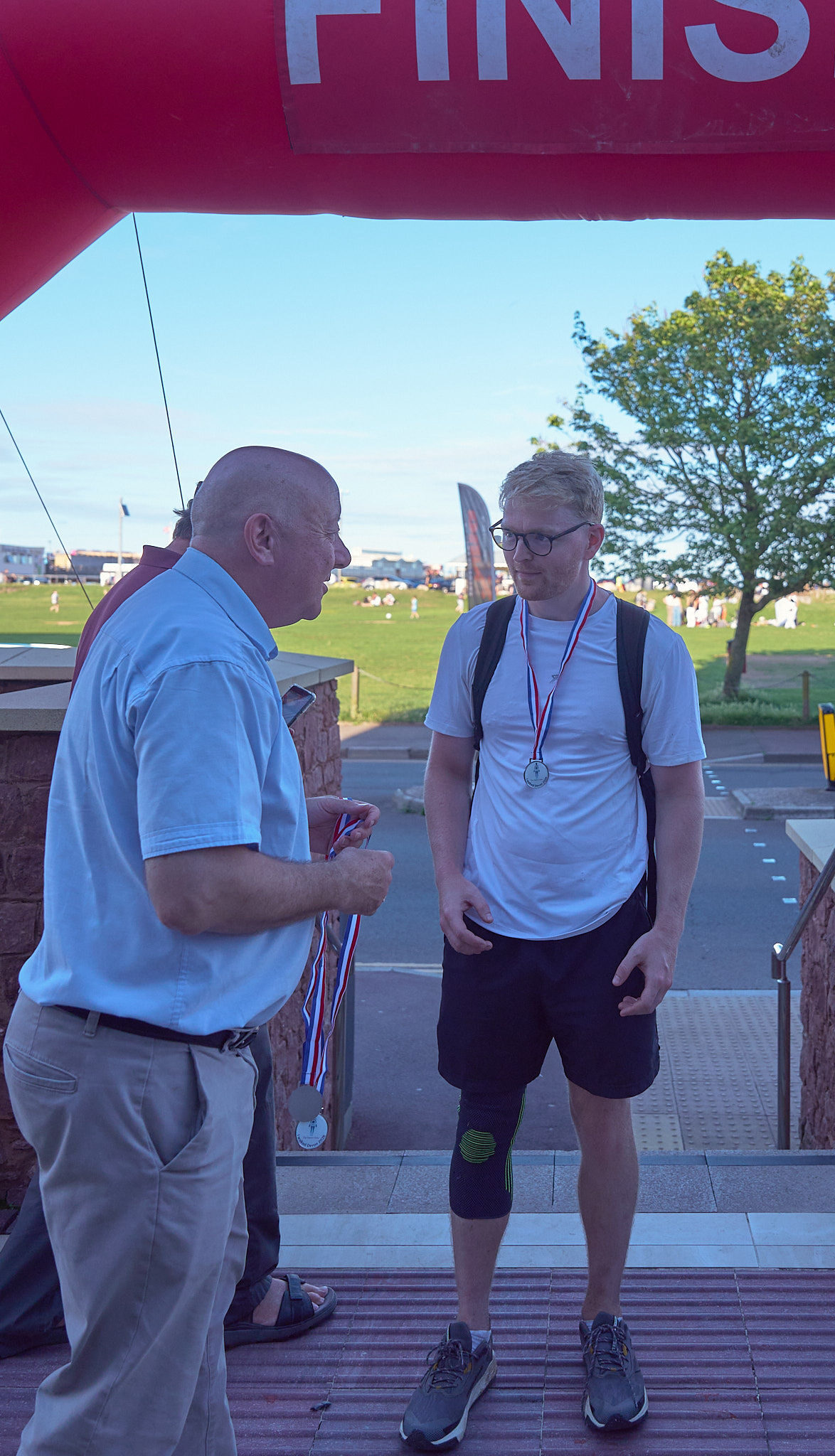 Our local MP, Steve Darling and his guide dog Jessie, was present at the finish line to present medals to everyone who crossed the line as were friends and family of the walkers. It was a highly emotional affair. As a sixty-something-year-old man, I’m not afraid to admit that I cried when I saw my wife and daughter there. After all the build-up, from a single Facebook post expecting to get 10 or 12 people through to almost 6000 people saying they were interested, the walk was the easy bit and the relief of finishing was extraordinary. The atmosphere was extraordinary. The organisation from XNRG was extraordinary. The people taking part were extraordinary. The donors were extraordinary. The whole thing was simply amazing.
If you want to see some of the incredible photos from the weekend, they’re available on our website, and we’ll be adding the gallery link here:
They really do tell the story better than we can. If you did want to buy them, they are on sale for £2.90 each, with the charity receiving 80% of the fees
WHAT THE MONEY MEANS
£167,000. Our first-ever reserves. And thousands of hours of therapy for people who need it.
We need to talk about what this walk means for The Devon Clinic — and most importantly for the people we serve.
After gift aid, Walk Devon 2026 raised approximately £167,000. Expenses ran into tens of thousands of pounds but still left us with a healthy budget to work with.
If you’ve been following our journey for any length of time, you’ll know that we have always operated close to the edge financially. We are a small charity. We have always put every penny back into the people we serve. And until now, that has meant we had no reserves — no safety net. If everything had suddenly stopped, we would have been in serious trouble.
Thanks to everyone involved in Walk Devon 2026, that has changed
For the first time in our history, The Devon Clinic has reserves. That is not a small thing. That is the difference between being fragile and being stable. It means we can weather unexpected challenges. It means we can plan and can think about the future rather than just surviving the present.
We had hoped to use a significant portion of these funds to purchase our current premises — something we’ve been working towards for some time. Unfortunately, our landlord recently changed his mind about selling, which was disappointing news. But we’ve adjusted our thinking, and we’ll be using part of the money as a deposit towards moving somewhere bigger — a space that can hold more therapists, serve more clients, and grow alongside the community that has given us so much.
Our website is homemade and will be upgraded to give users a much easier and better experience. I made a verbal promise to help Bude Wellness Warriors, a men’s mental health group based in – well, Bude…
And then there is the part that matters most of all: what goes back into the community.
 In the best-case scenario, this money could fund approximately 3,500 hours of therapy for people who need it but can’t afford it. In the worst-case scenario — even accounting for all the costs and uncertainties — we’re still looking at around 1,000 hours of professional therapy, delivered to some of the most vulnerable people in Torbay and South Devon.
I’m guessing that in reality, that will work out around 2,500 sessions with a skilled therapist that might otherwise have been simply out of financial reach for people. For people dealing with trauma, with grief, with anxiety and depression, with the aftermath of domestic abuse, with the kind of stress that makes daily life feel impossible — those hours are not just helpful. They can be life-changing.
We are incredibly proud of everything this community has achieved together. Truly.
WALK DEVON IN 2027: JOIN US
We’re doing it again. And we want you with us.
Walk Devon is coming back in 2027, and we would love for you to be part of it.
Is it tough? Yes. Genuinely, honestly tough. In fact, the word brutal was the most commonly used word I heard come the end. You will walk through the night. You will probably get rained on. Your legs will ache in ways you didn’t know legs could ache. You will get blistered feet; you might lose toenails; you will most likely question your life choices around 3 am on a hillside in Mid-Devon.
And then the sun will come out. And you’ll look around at the extraordinary landscape you’re standing in, and the extraordinary people walking beside you, and you’ll understand exactly why people do this.
When the going got tough for me, I kept thinking of some of the clients I have seen who have to go through pain every day of their lives; they have no choice but to. We chose to do this voluntarily, two weeks on, and my legs are fine – there are still a few holes where skin used to be on my feet, but they are healing nicely. Now, thanks to the generosity of everyone involved, those clients can begin to heal from their wounds too.
The walk really is brutal, beautiful, and life-changing — including, if our walkers this year are anything to go by, the lives of the people who walk it.
Whether you took part this year and are already thinking about going back, or whether you’re hearing about this for the first time and feeling something stir — we want to hear from you. Sign-ups and information for Walk Devon 2027 are available on our website.
My plan is to open a hub in North Devon – hopefully in Barnstaple- employing local therapists and providing help to those who need it but can’t afford it
You don’t have to be fast. You don’t have to be experienced. You just have to want to do something that matters.
We are taking expressions of interest HERE; at the time of writing, we already have over 120 people willing to give it a go
We hope to see you at the start line.
TIPS FOR SUMMER: KEEPING YOUR COOL WHEN THE HEAT IS ON
Practical ways to protect your mental wellbeing when the temperature rises
With summer in full swing, we wanted to share a few gentle reminders about how to look after your mental health when the heat turns up — because heat and stress affect us more than most people realise.
- Understand why heat affects your moodWhen it’s hot, your body is working harder just to keep you comfortable — and that takes energy. Physiologically, heat increases cortisol (the stress hormone) and can disrupt sleep, both of which have a significant impact on your mood, patience, and resilience. If you’ve found yourself more irritable, more anxious, or more easily overwhelmed recently, it may not just be the circumstances. It might simply be the temperature. That is a completely normal response, and knowing that can take a little of the pressure off.
- Use your breath to cool your nervous systemOne of the most immediately effective tools you have for calming a stressed or overheated nervous system is your breath. Try this: breathe in slowly through your nose for four counts, hold gently for four, then breathe out through your mouth for eight counts. The longer exhale activates your parasympathetic nervous system — the part of you that says “we’re safe, we can relax.” Do this three or four times and notice what shifts. It works whether you’re physically hot, emotionally frazzled, or both.
- Drink water — seriouslyWe know you’ve heard it before, but it genuinely matters: even mild dehydration (just 1–2% below your optimal level) measurably affects concentration, mood, and your ability to manage stress. When we’re hot, we’re losing fluid faster than we realise. Keep a glass of water nearby throughout the day, and if you notice yourself feeling foggy, short-tempered, or low — have a drink before you do anything else. It sounds almost too simple, but it’s often exactly what’s needed.
- Ground yourself when everything feels too muchIf the heat is making you feel agitated, overwhelmed, or anxious, try a quick grounding exercise. The 5-4-3-2-1 technique is one of our favourites: name five things you can see, four you can physically feel (the chair beneath you, your feet on the floor), three you can hear, two you can smell, and one you can taste. It takes less than two minutes and gently pulls your nervous system back into the present moment, out of whatever spiral it was heading into.
- Cold water on your pulse pointsA quick, practical reset: run cold water over your wrists, or press something cold against the inside of your wrists and temples. Your pulse points sit close to the skin’s surface, and cooling them sends a signal to your whole body that the temperature is dropping. It won’t fix a difficult day, but as a fast way to physically calm down in a moment of stress or overwhelm, it is remarkably effective.
- Give yourself permission to slow downThere is a cultural pressure to be productive, social, and “on” regardless of the weather or the season — and summer often amplifies that. But the truth is, heat asks something of us. It asks us to slow down a little, to rest more than we usually would, to adjust our expectations of what a day should look like. That isn’t weakness or laziness. It’s wisdom. If you can, move the hardest tasks to the cooler parts of the day. Take shorter breaks more often. And if a day simply doesn’t go the way you planned because you were too hot and too tired — be kind to yourself about it. You’re human. Humans feel the heat.
If you’re struggling at the moment — with your mental health, your stress levels, or anything else — please remember that we’re here. Sessions start from £15, and no one should ever feel that the cost is a barrier to reaching out. Get in touch at devonclinic.co.uk or drop us a message.
Thank you
We’ll end where we began: with gratitude.
Thank you to every walker who took a step — whether you walked two miles or fifty. Thank you to everyone who sponsored, shared, donated, cheered, or simply believed in what we’re doing. Thank you to Excess Energy and every volunteer who gave their time to make this happen. Thank you to the farmer on Dartmoor who took the arrival of hundreds of strangers in his field in the early hours of the morning with rather admirable calm.
And thank you to you — for reading this, for being part of The Devon Clinic community, and for caring about what we care about.