What do a 24-hour walk, fundraising, and mental health have in common?
 So some of my students and some of my clients have been going on about manifestation. Someone even told me that I should ask the universe to be successful on undertaking Walk Devon. The idea is that “what you put out, you get back” or “manifest what you want”
On the surface, it sounds really good and positive.
But in the real world — especially in the work we do with things like Domestic Abuse or veterans living with PTSD — that idea doesn’t quite hold up. And in some situations, it can do more harm than good.
If someone has experienced domestic abuse, trauma, or the loss of a child, the suggestion that they somehow “attracted” those experiences can land as blame. It can reinforce guilt, shame, and self-doubt that are already there.
That’s not something we support.
However… there might be some elements we can take from it. It’s worth looking at what actually helps people move forward — whether that’s getting through a 24-hour coast-to-coast walk, raising money for a cause, or rebuilding life after something difficult.
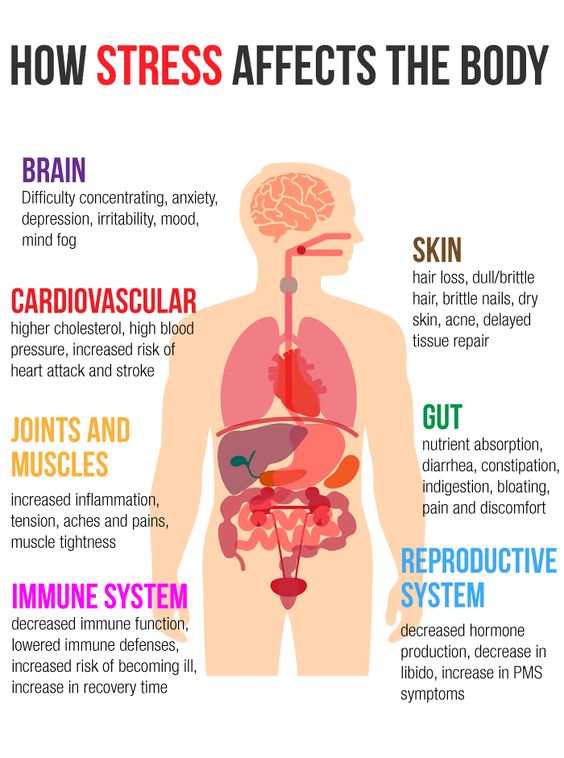
The mind and body are not separate.
It’s easy to talk about “mindset” as if it exists on its own.
In reality, thoughts, emotions, and physical responses are constantly interacting. This is often described as the Mind-body connection.
You see it every day, anxiety can increase heart rate and tighten breathing. What’s happening is that we still have a cave-dweller’s brain, and if there’s a threat, perceived or real, we need to pump oxygen-rich blood to our muscles and internal organs, ready to either run away or defend ourselves (commonly known as fight-or-flight).
Low mood can drain energy and slow everything down, and physical exhaustion can make negative thinking louder
It works both ways, though; If we change what we focus on, our body responds.
In some cases (not all), something as simple as changing our breathing or movement can shift our thoughts.
In therapies such as CBT we talk about thoughts leading to feelings, those feelings lead to behaviours. Those behaviours can reinforce those thoughts, which reinforce the feelings, and so it goes on. This can be a positive thing or a negative thing. If it becomes a negative thing, we need to learn how to interrupt that triangle of Thoughts, Feelings and Behaviours – but that’s for another blog, another day.
The More You Look, The More You See (my version of manifestation)
We all have something known as the Reticular Activating System (RAS). It’s a system designed to filter what you notice. An example of this would be if you get yourself a new car, a white Audi A3 for example – all of a sudden, you see white Audi A3’s everywhere. It’s not that there are more of them on the road than before you got your car; it’s just that you notice them more.
According to neuroscience news, we are subject to a total sensory input of 1 billion bits of information per second at any given moment, one billion – that’s huge, far too much information for you to process. So your system prioritises on
- What feels important
- What you’ve been focusing on
- What you expect to see
This filter affects our whole experience of life. We begin to notice what we want to notice. I had a student once who drove for a living. He was insistent that every set of traffic lights he came across was at red. We got him to count how many lights he went through and how many of these were indeed red. He came across 26 sets of lights – eight of which were red.
How many people say they ALWAYS get in the wrong queue at the supermarket? They don’t, it’s just that they notice it more when they do.
Why this matters in trauma and abuse. 

In the clinic, we work with people who have experienced:
- domestic abuse
- trauma with a big T and trauma with a small T (another blog for another day)
- significant loss
What they often carry isn’t just the memory of what happened, but the ongoing impact:
- They have heightened alertness
- They have difficulty switching off their thoughts
- They often have patterns of self-blame
- Their bodies remain on edge, ready for flight or fight
This isn’t because they’ve “manifested” anything. It’s because their system has adapted to what they’ve been through. The work is not about telling people to “think differently” or “be more positive”.
It’s about helping them to feel safe and reducing overwhelm. When we do this, we can begin to shift some of their patterns over time, which in turn builds a sense of control and stability. When they see they have more control, guess what- they begin to look for ways of having more control.
If someone has had trauma, I ask them to tell me about any “wins of the week.” It begins to get them to focus on things that have gone well. This is why having a gratitude list is so important, it makes you look at good stuff. The more you look, the more you see – remember?
So what’s all this got to do with undertaking an ultra-marathon (albeit walking, not running) 

Our little jaunt across Devon might seem like a completely different world to what I’ve talked about above.
But in many ways, the same principles apply.
At some point during the walk, you will hit a low. You’ll get tired, you will begin to ache, you’re walking for 24 hours non-stop – of course you will.
Your thinking will becomes less helpful and the finish will feel a long way off
That’s when your attention starts to narrow, it begins to focus on the negatives. There’s ages to go yet, I’m not even half-way and it hurts, I can’t do it, my rucksack is uncomfy, my socks are wrong, my shoes are bad – and so it can go on – unless we deliberately shift our mindset. The next checkpoint is never more than 10 miles away. I’ve done ten-mile loads of times. I keep my pace steady and regular. I can talk to the people I’m with. I can focus on a podcast. I can enjoy the views (which will be stunning).
Doing all of those things makes the experience manageable again.
Nothing external has changed.
But your internal experience has shifted. Our Reticular Activating System gets switched from looking at the negatives to the positives
The same applies to fundraising
Raising money for the walk works in exactly the same way. There’s no evidence that you can “manifest donations”.
But there is clear evidence that focus changes behaviour, behaviour increases opportunities, opportunities lead to results
When you stay focused on your fundraising, you notice who might be able to help, you talk about the walk more naturally, you follow up instead of leaving things
When you tell yourself it’s hard then you begin to hesitate, you assume people won’t be interested and you miss opportunities that were right in front of you
The biggest barrier: not asking
Most people don’t donate for one simple reason and that’s that they weren’t asked clearly.
It’s easy to soften it by saying stuff like, “I’m doing this walk… no pressure…” That’s a sure way to not get a donation.
Keeping it clear and simple is important. Something like, “I’m walking coast-to-coast across Devon for The Devon Clinic. We’re raising money so people who’ve experienced trauma or domestic abuse can access support. Would you be open to sponsoring me?”
Saying something like the above is far more effective, whether it’s in person or online.
It’s honest, it gives context and it gives the other person a clear choice.
Expect the uncomfortable moments.
 Whether it’s the walk or the fundraising, there will be points where you doubt yourself – we all do sometimes. You, me, them out there – everyone. You will feel uncomfortable, and you will wonder whether to carry on or not
That’s not a sign something’s wrong. It’s part of the process. The difference is what you do with those thoughts. It’s very easy to tell ourselves we can’t do something.
What about the person who can never find anything?
The more they tell themselves they can’t find something, the more it becomes a reality. This happened to me recently; I’d bought a new pair of walking trousers and couldn’t find them anywhere. My wife came home and found them straight away. In the wardrobe, the same wardrobe I swear I’d checked several times already.
Did I manifest them out of sight? No, but I’d told myself I couldn’t find them, so that became my reality. If we tell ourselves the walk is going to be painful and hard and difficult and impossible – it will be. If we tell ourselves the walk might cause some discomfort, and tiring but we can absolutely do it – it will be.
“Whether you think you can or whether you think you can’t – you’re right.” – Henry Ford
Your “Reason Why” Can Carry You Through
At some point — whether it’s 4am as the sun comes up over Dartmoor or just before you press “send” on a message asking for sponsorship — willpower alone won’t be enough.
Your reason why will though.
The money YOU raise could help,
- someone access counselling they couldn’t otherwise afford
- someone leave an abusive situation with support
- someone begin to rebuild after trauma or loss
When you look for your reason why, it changes the meaning of what you’re doing.
And that in turn changes how far you’re are willing to go. Personally, I have several reasons. It’s for the client who said goodbye to her daughter before she got run over & killed on her way to school, it’s for the ex-Royal Marine with horrendous PTSD, every time he hears a lone dog bark, or a baby cry – he’s instantly transported in his mind to Afghanistan, it’s my daughter saying she’d be disappointed in me if I didn’t do it. – those are my why’s – what are yours?
A few practical tips
For the walk:
- focus on the next checkpoint, not the full distance.
- expect low points and keep moving through them
- use simple resets (breathing, pace, posture)
For fundraising:
- be clear on what you’re asking for
- notice who might be able to help
- ask directly
- follow up consistently
For life beyond both:
- notice where your attention goes
- bring it back when it drifts
- take small, manageable steps forward
The idea that people “manifest” everything that happens to them doesn’t reflect reality — and for many, it can be damaging.
A more useful and compassionate way to look at it is this is to realise that you’re not to blame for what’s happened to you, but you can take the next step forward.
That step might be literally one foot in front of the other across Devon. It might be a conversation — asking someone to support a cause that matters.
And sometimes it’s much much more subtle but just as powerful like choosing, in a small moment, to keep going.
If you are interested in helping the work we do at the clinic, you can help by volunteering at the checkpoints, you can donate to the clinic here justgiving.com/campaigns/walk-devon you can spread the word about what we do.
Thank you for taking the time to rad this blog, it started off with AI but quickly became my own thoughts and viewpoints – I hope you found it useful.
Warmest Regards
Chris